Collaborative Workspace: Boosting Team Productivity

Nearly half of American freelancers report higher productivity when working in collaborative environments. For Amarillo professionals tired of distractions at home or craving meaningful connections, the right coworking space can make all the difference. Whether you need reliable technology, comfortable work zones, or opportunities to share ideas, exploring flexible workspace options in Amarillo helps you access the tools, community, and resources needed to thrive.
Key Takeaways
| Point | Details |
|---|---|
| Modern Spaces Foster Collaboration | Collaborative workspaces prioritize connectivity and creativity, merging physical and virtual platforms for enhanced professional interaction. |
| Types of Workspaces Cater to Needs | Various workspace types, including open areas and private zones, are designed to accommodate different work styles and foster productive collaboration. |
| Enhanced Productivity Through Design | These work environments boost productivity by facilitating rapid knowledge sharing and reducing communication barriers among team members. |
| Avoid Common Collaboration Pitfalls | Organizations must address misconceptions about collaboration to prevent burnout, reduce micromanagement, and ensure effective technology use. |
What Defines a Collaborative Workspace Today
A collaborative workspace has transformed dramatically from traditional office environments, becoming a dynamic ecosystem designed to foster innovation and professional interaction. Modern collaborative spaces are no longer confined to physical walls but represent flexible environments that support interconnected work cultures. These spaces prioritize connectivity, creativity, and collective synergy across both physical and virtual platforms.
Today's collaborative workspaces are strategically engineered to support three critical collaborative functions: collective work processes, interpersonal relationships, and adaptive professional behaviors. Unlike traditional hierarchical models, these environments emphasize partnership and shared decision making. They balance structured frameworks with iterative processes, allowing professionals to engage dynamically while maintaining operational effectiveness.
Key characteristics of contemporary collaborative workspaces include technological integration, flexible architectural designs, and intentional community-building strategies. These spaces are equipped with advanced communication technologies, movable furniture, and zones that accommodate different work styles – from quiet individual focus areas to interactive group collaboration zones. The goal is creating an environment that seamlessly supports diverse professional needs while encouraging spontaneous knowledge exchange.
Pro tip: When evaluating a collaborative workspace, assess its adaptability to your specific workflow and potential for fostering meaningful professional connections.
Types of Collaborative Workspaces and Key Features
Collaborative workspaces have evolved into sophisticated environments designed to accommodate diverse professional needs. Modern collaborative spaces encompass multiple types tailored to different work styles and interaction requirements. These workspace categories range from open collaborative areas to specialized zones that support various professional activities and communication strategies.
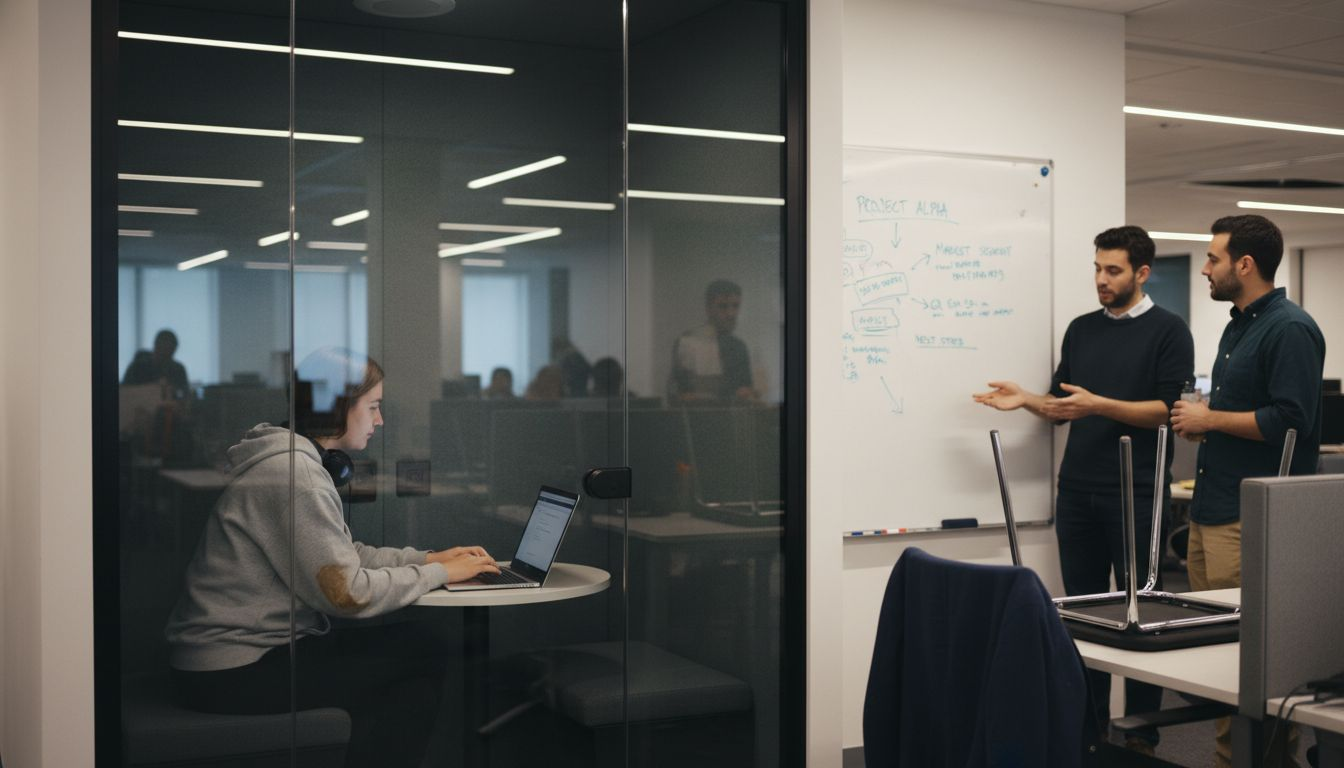
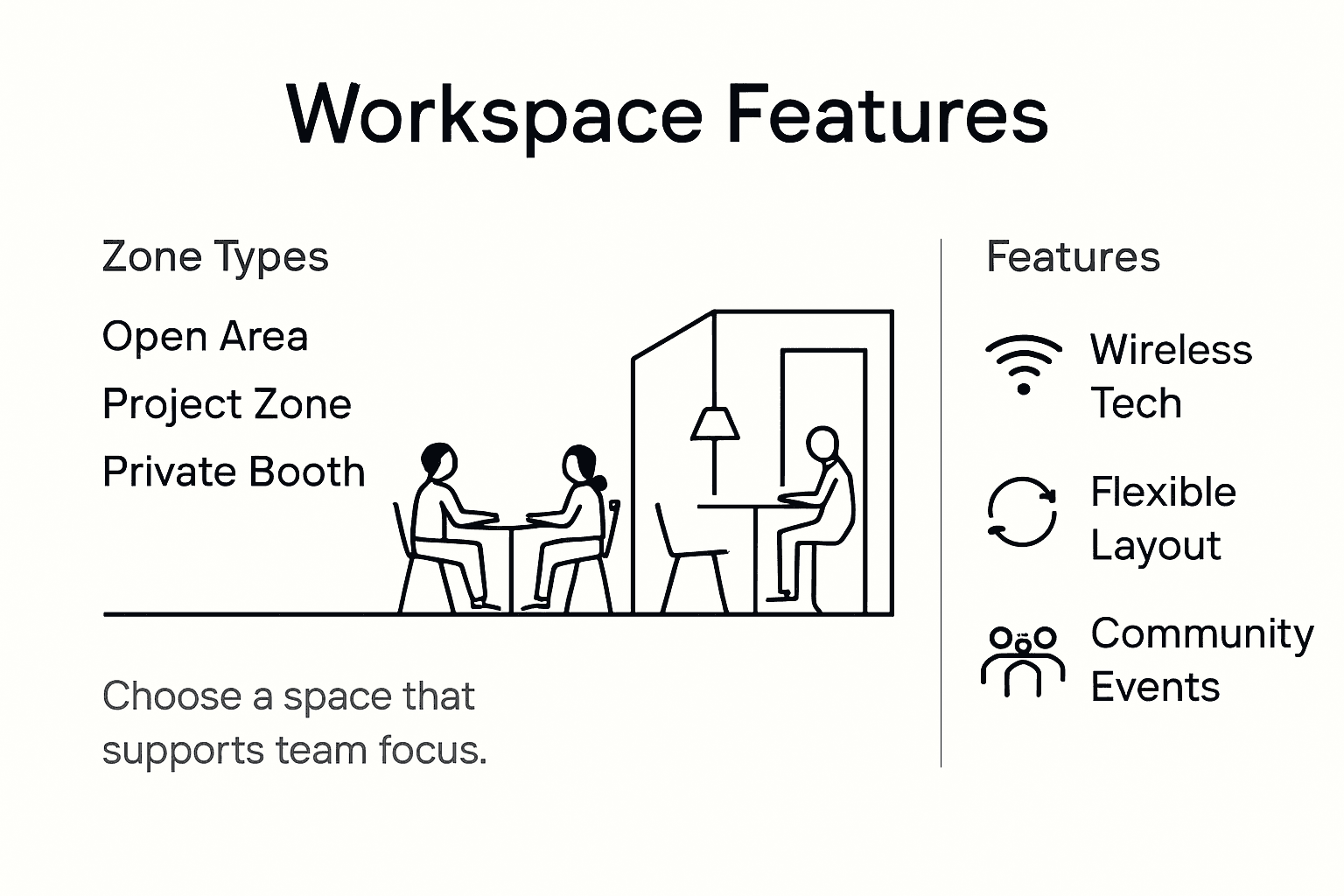
The primary types of collaborative workspaces include open collaborative areas, project-specific zones, private thinking spaces, and hybrid interaction environments. Open collaborative areas encourage spontaneous interaction and informal discussions, featuring flexible furniture and accessible layouts. Project spaces are strategically equipped with advanced technologies and configurable work surfaces, enabling teams to collaborate seamlessly on complex initiatives. Private zones provide quiet environments for focused individual work or strategic planning, ensuring professionals can balance collaborative and independent tasks.
Key features that define contemporary collaborative workspaces extend beyond physical design. These environments integrate sophisticated technological infrastructure, acoustic management systems, and adaptable architectural elements. Smart furniture, high-speed internet connectivity, video conferencing capabilities, and intuitive room booking systems are standard features. The goal is creating a holistic workspace ecosystem that supports dynamic work modes and facilitates seamless communication across different professional contexts.
Here is a comparison of workspace types and their unique contributions to professional effectiveness:
| Workspace Type | Best for | Unique Advantage |
|---|---|---|
| Open Collaborative Area | Creative brainstorming | Facilitates quick idea exchanges |
| Project-Specific Zone | Task-focused collaboration | Supports complex project workflows |
| Private Thinking Space | Deep concentration | Enhances individual productivity |
| Hybrid Interaction Environment | Flexible teamwork | Balances solo and group work needs |
Pro tip: When selecting a collaborative workspace, prioritize environments that offer flexible configurations and comprehensive technological support to maximize your professional productivity.
How Collaborative Workspaces Enhance Productivity
Collaborative workspaces represent a transformative approach to professional productivity, designed to optimize team performance and individual efficiency. These innovative environments strategically support organizational goals by streamlining communication and accelerating decision-making processes. By creating intentional spaces that balance collective interaction with individual focus, companies can unlock unprecedented levels of workplace productivity.
The productivity enhancement mechanisms of collaborative workspaces are multifaceted. They facilitate rapid knowledge sharing through proximity and designed interaction zones, enabling teams to exchange ideas more quickly and organically than traditional office settings. Advanced technological infrastructure, such as integrated communication tools and flexible workstations, allows professionals to seamlessly transition between collaborative and independent work modes. This dynamic environment reduces communication barriers, minimizes time spent on coordination, and creates opportunities for spontaneous problem solving and cross-functional collaboration.
Beyond physical design, collaborative workspaces cultivate a psychological environment that motivates increased productivity. The presence of diverse professionals from different backgrounds creates a stimulating ecosystem that promotes creativity, challenges existing thinking patterns, and introduces fresh perspectives. Professionals working in these environments report higher motivation levels, increased engagement, and a stronger sense of community. The intentional design of these spaces – with areas for quiet concentration, team brainstorming, and casual interaction – supports varied work styles and cognitive needs, ultimately driving individual and collective performance.
Reviewing core productivity benefits helps clarify the impact of collaborative workspaces:
| Productivity Benefit | How It Works | Professional Impact |
|---|---|---|
| Rapid Knowledge Sharing | Proximity and open zones | Accelerates learning and execution |
| Reduced Barriers | Seamless communication tools | Cuts downtime in team coordination |
| Motivation Boost | Diverse professionals present | Increases engagement and creativity |
| Adaptability | Flexible zone variety | Matches employee preferences and tasks |
Pro tip: Maximize your collaborative workspace experience by alternating between different workspace zones throughout your workday to maintain high energy and sustain productivity.
Common Misconceptions and Pitfalls to Avoid
Collaborative workspaces offer tremendous potential, but they are not without significant challenges that can undermine their effectiveness. Many organizations fall into predictable traps that compromise team performance and collaborative dynamics, making it crucial to understand and proactively address potential pitfalls before they derail productivity.
One of the most prevalent misconceptions is that collaboration inherently means constant interaction and continuous group work. In reality, effective collaboration requires a nuanced approach that balances collective engagement with individual autonomy. Common pitfalls include micromanagement, which stifles creativity and team initiative, unclear role definitions that create confusion and redundancy, and an overemphasis on meetings that ultimately reduce actual productive work time. Teams must establish clear communication protocols, defined expectations, and flexible working boundaries to prevent collaborative burnout and maintain meaningful engagement.
Technology and infrastructure can also create significant barriers to successful collaboration. Inadequate communication tools, poorly designed digital workflows, and insufficient technological infrastructure can dramatically hinder team performance. Organizations frequently underestimate the importance of selecting the right collaborative technologies, assuming that merely providing digital platforms will automatically improve teamwork. Successful collaborative environments require intentional technology integration that supports seamless communication, respects individual working styles, and provides intuitive platforms for knowledge sharing and project management.
Pro tip: Conduct periodic collaborative health checks to assess team dynamics, communication effectiveness, and identify potential workflow bottlenecks before they become systemic problems.
Comparing Collaborative Workspaces With Alternatives
Collaborative workspaces represent a transformative approach to professional environments, offering distinct advantages over traditional work models like home offices, remote setups, and conventional corporate spaces. Unlike isolated working arrangements, these dynamic spaces provide a unique blend of flexibility, social connectivity, and professional infrastructure that addresses the evolving needs of modern professionals.
Compared to home offices, collaborative workspaces eliminate the significant challenges of remote work, such as social isolation, limited networking opportunities, and potential productivity barriers. While remote work offers personal comfort, it often lacks the structured environment and spontaneous interactions critical for professional growth. Collaborative spaces bridge this gap by providing a professional ecosystem that supports individual focus, facilitates team collaboration, and creates opportunities for cross-disciplinary engagement that are impossible in home or traditional office settings.
Traditional corporate offices, characterized by rigid hierarchies and fixed workstations, contrast sharply with collaborative workspaces. These innovative environments provide a more adaptable and human-centered approach to work, supporting employee well-being and professional development. Where conventional offices impose strict schedules and spatial limitations, collaborative workspaces offer flexible configurations, diverse working zones, and the ability to seamlessly transition between individual and group work modes. This adaptability not only enhances productivity but also supports the psychological needs of modern professionals seeking autonomy and meaningful workplace interactions.
Pro tip: Evaluate potential workspaces by testing their environment during a coworking day pass in Amarillo, paying close attention to how the space's design and community support your specific professional objectives.
Unlock Your Team's Full Potential with Union Hall TX Collaborative Workspaces
The article highlights the critical challenge of balancing collaboration with individual productivity while navigating modern workplace dynamics. If you struggle with finding a workspace that supports rapid knowledge sharing, flexible work zones, and seamless communication without the distractions of constant interaction, Union Hall TX offers the ideal solution. Our flexible workspace options like private offices, dedicated desks, and open coworking areas are thoughtfully designed to foster creativity and teamwork while providing the quiet zones needed for deep focus.
Experience how a professional and adaptable environment enhances motivation, reduces communication barriers, and boosts your team’s productivity. Join a vibrant community with amenities such as 24/7 access, high-speed internet, conference rooms, and more, all tailored for Amarillo professionals seeking a secure and collaborative workspace. Take the next step to elevate your work environment by exploring our membership options at Union Hall TX. Discover the perfect balance of collaboration and individual focus with our private offices, dedicated desks, and flexible spaces designed to meet your unique workflow needs.
Frequently Asked Questions
What are the key characteristics of a modern collaborative workspace?
Modern collaborative workspaces feature technological integration, flexible architectural designs, and community-building strategies. They prioritize connectivity and creativity and include zones for various work styles, such as quiet areas for individual focus and interactive spaces for team collaboration.
How do collaborative workspaces enhance team productivity?
Collaborative workspaces enhance productivity by facilitating rapid knowledge sharing, reducing communication barriers, and boosting motivation. They provide environments that support both collective interaction and individual focus, which leads to improved team performance and engagement.
What are common misconceptions about collaborative workspaces?
A common misconception is that collaboration means constant group interaction. Effective collaboration actually requires a balance between collective engagement and individual autonomy. Avoiding micromanagement and defining clear roles are crucial for successful teamwork.
How do collaborative workspaces compare to traditional corporate offices?
Collaborative workspaces offer more flexibility and a human-centered approach compared to traditional corporate offices. They allow for diverse working zones and adaptable configurations, supporting employee well-being and productivity instead of rigid structures and fixed workstations.
Recommended
- How can working at a shared workspace benefit your business? — Union Hall Workspace
- coworking for freelancers in Amarillo
- How to thrive at a coworking space? — Union Hall Workspace
- Why remote workers prefer physical meeting spaces for client interactions — Union Hall Workspace
- Role of Scheduling in Team Productivity Explained - WhenNOT Blog
Work from Union Hall Workspace in Amarillo
Coworking from $99/mo, dedicated desks $200/mo, and private offices from $400/mo. 24/7 access, month-to-month, no lease. See it in person with a free tour, or join online today.
Join or Book a Tour Compare Memberships