Office Leasing Choices: Coworking vs. Traditional Leases

Long-term leases often leave Amarillo professionals feeling trapped by fixed costs and inflexible terms. For remote workers and freelancers seeking more freedom, coworking spaces offer a flexible solution that breaks away from traditional office models, providing adaptable memberships and bundled amenities. These collaborative environments cater to shifting work needs, helping you avoid hefty upfront investments while staying connected with peers and modern workspace resources to drive productivity.
👉 Want to see what a flexible workspace actually looks like?
Schedule a tour of Union Hall Workspace
Key Takeaways
| Point | Details |
|---|---|
| Traditional vs. Coworking | Traditional office leasing involves long-term contracts and high upfront costs, while coworking spaces offer flexible, month-to-month agreements and lower initial investment. |
| Cost Efficiency | Coworking spaces bundle amenities into a single fee, reducing hidden expenses and financial risks associated with traditional leases. |
| Scalability | Coworking environments allow for easy adjustment of workspace usage, making them ideal for small businesses and freelancers who need adaptability. |
| Enhanced Collaboration | Coworking spaces foster networking and collaboration opportunities, helping professionals build connections and enhance productivity. |
Defining Coworking and Traditional Office Leasing
Modern professionals increasingly seek flexible workspace solutions that break traditional office leasing models. Coworking spaces represent an innovative approach to professional environments, offering shared workspace arrangements that differ dramatically from conventional office rentals.
Traditional office leasing typically involves long-term contracts where businesses rent exclusive, private office spaces with fixed square footage and predetermined layouts. These arrangements often require significant upfront capital, multi-year commitments, and substantial overhead costs.
In contrast, coworking spaces provide a more fluid and cost-effective solution. These shared environments allow professionals from diverse backgrounds to work alongside one another while sharing resources and infrastructure. Flexible workplace models enable individuals and small teams to access professional workspace without the financial burden of traditional leases.
Pro Tip: When evaluating workspace options, calculate your total cost of ownership by comparing not just rent, but also expenses like utilities, internet, office equipment, and maintenance.
➡️ Explore flexible coworking memberships in Amarillo
View Union Hall membership options
Comparing Space Types and Leasing Terms
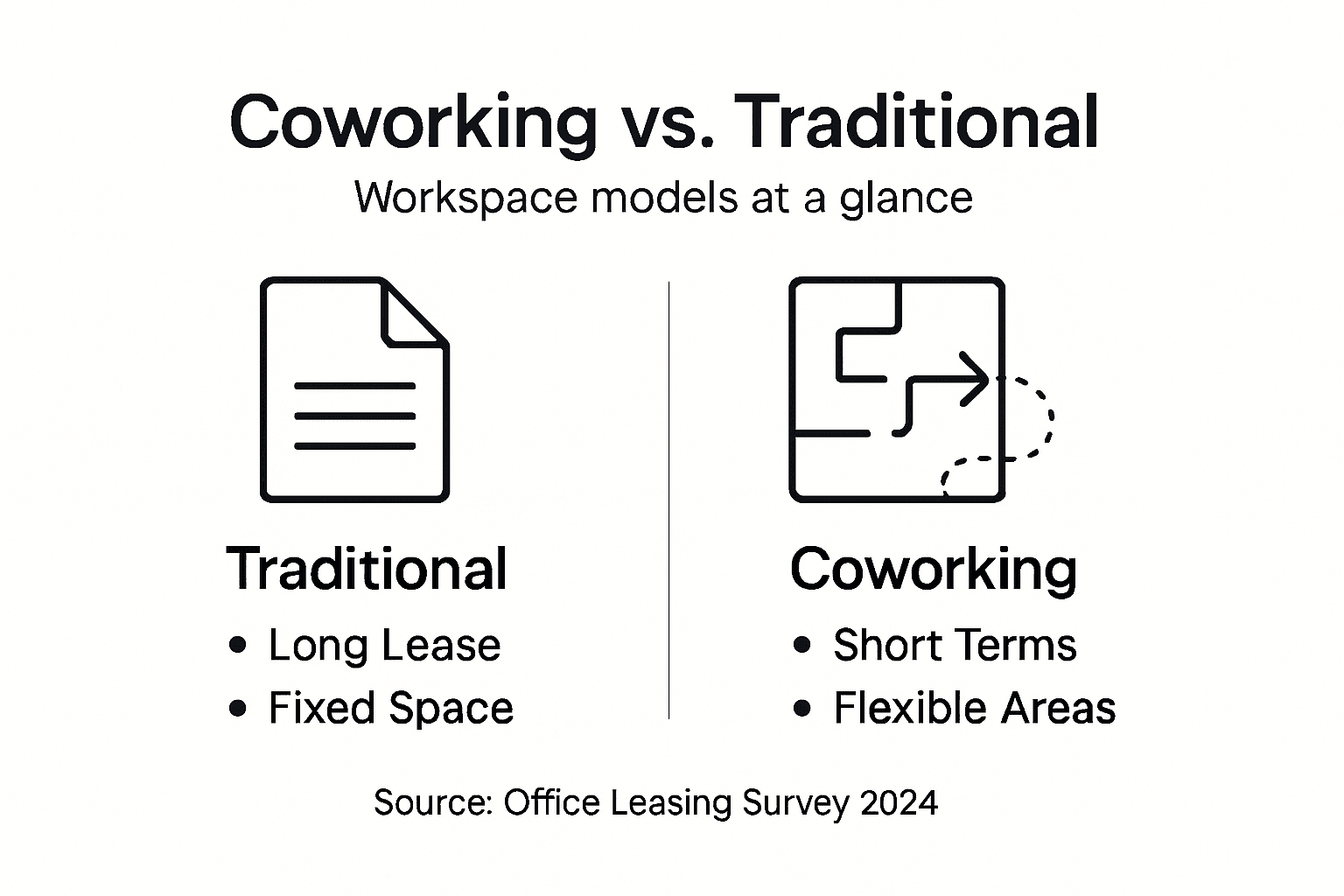
Professionals seeking workspace solutions encounter two primary models: traditional office leasing and modern coworking arrangements. Each option presents unique characteristics designed to meet varying business needs.
Traditional office leasing typically involves long-term commitments with fixed spaces exclusively dedicated to a single organization. These arrangements require substantial upfront investments and limit your ability to scale without penalty.

Coworking spaces, by contrast, offer adaptable workplace solutions with multiple membership tiers, including hot desks, dedicated desks, and private offices. Professionals can upgrade or downsize quickly as needs change.
👉 See the difference in person
Book a tour of Union Hall Workspace
Amenities, Community, and Productivity Impact
Workspace environments dramatically influence professional performance, with coworking spaces offering advantages beyond square footage alone.
Coworking spaces provide intentionally designed amenities like high-speed internet, ergonomic workstations, conference rooms, and communal areas. The layout encourages interaction, collaboration, and knowledge sharing that traditional offices rarely support.
Work-life balance also improves in coworking environments. Remote workers and freelancers benefit from reduced isolation, while small teams gain access to a professional setting without managing office logistics.
Pro Tip: Visit a coworking space during working hours to gauge real community energy and noise levels.
➡️ Experience the workspace firsthand
Schedule a Union Hall tour
Costs, Contracts, and Financial Risks
Traditional office leases demand long-term financial forecasting and expose businesses to risk if headcount or revenue changes unexpectedly. Termination fees, unused space, and fixed overhead can strain budgets quickly.
Coworking spaces flip that model. Members pay predictable monthly fees that bundle workspace, utilities, internet, and amenities into one operational expense.
Pro Tip: Compare costs over 12–24 months, including hidden expenses, not just monthly rent.
👉 See transparent, all-inclusive pricing
Union Hall membership options
Choosing the Best Fit for Your Business
For freelancers, startups, and small teams, coworking often delivers the best balance of flexibility, professionalism, and cost control. Access to meeting rooms, reliable internet, and collaborative space removes friction without locking you into years-long commitments.
Hybrid models also benefit larger organizations, allowing satellite teams or project-based staff to work professionally without expanding permanent office space.
Pro Tip: Survey your team about productivity and workspace preferences before committing to a long-term lease.
➡️ Find a workspace that adapts as you grow
Explore Union Hall workspaces
Discover Flexible Workspace Solutions That Fit Your Unique Needs
Rigid leases, hidden costs, and unreliable home offices can quietly limit productivity and growth. Union Hall Workspace was built to remove those obstacles. We offer flexible memberships with transparent pricing, professional amenities, and scalable options designed for Amarillo’s remote workers, freelancers, and small businesses.
👉 Take the next step
Frequently Asked Questions
What are the key differences between coworking spaces and traditional office leases?
Coworking spaces offer short-term agreements, lower upfront costs, and shared amenities, while traditional leases require long-term commitments and higher financial risk.
How can coworking spaces benefit small businesses or freelancers?
They provide scalable workspace, professional amenities, and community without major upfront investment.
What amenities are typically included in coworking spaces?
High-speed internet, meeting rooms, shared work areas, and utilities are usually bundled into one monthly fee.
What financial risks are associated with traditional office leasing?
Long-term contracts, large deposits, and penalties for early termination or downsizing.
Recommended
- 6 reasons coworking is great for real estate professionals — Union Hall Workspace
- Why Coworking Spaces Matter for Amarillo Professionals — Union Hall Workspace
- What amenities can I expect in a shared office space? — Union Hall Workspace
- Coworking Memberships: Unlocking Flexible Workspaces in Amarillo — Union Hall Workspace
- What Is Remote Workforce? Complete Business Guide | NineArchs